

Breast Implants in NYC
- What Are Breast Implants?
- Types of Breast Implants
- Breast Implant Shapes
- Breast Implant Surfaces
- Am I a Candidate for Breast Augmentation?
- Benefits of Breast Augmentation
- Implant Placement Options
- Incision Options
- Implant Size and Profile
- The Breast Augmentation Procedure
- Recovery After Breast Augmentation
- Risks and Considerations
- Combining Breast Augmentation with Other Procedures
- How Much Does Breast Augmentation Cost in NYC?
- Why Choose Dr. Broumand and 740 Park Plastic Surgery
- Patient Reviews and Results
- Frequently Asked Questions
If you are searching for breast implants in New York City or Manhattan, 740 Park Plastic Surgery offers a highly personalized approach to breast augmentation under the care of Dr. Stafford Broumand, a Harvard-trained, board-certified plastic surgeon with over 30 years of clinical experience. Whether you are looking to restore volume lost after pregnancy, correct asymmetry, or simply enhance your natural proportions, Dr. Broumand tailors every procedure to your unique anatomy and aesthetic goals.
Breast augmentation, also called augmentation mammoplasty, is one of the most commonly performed cosmetic procedures in the United States. According to the American Society of Plastic Surgeons, breast augmentation consistently ranks among the top cosmetic surgical procedures performed annually in the country.1 At 740 Park Plastic Surgery, patients throughout NYC, Manhattan, and New York City benefit from a surgical philosophy rooted in precision, artistry, and long-term results.
What Are Breast Implants?
Breast implants are FDA-approved medical devices placed beneath the breast tissue or chest muscle to increase breast size, restore lost volume, or improve shape and symmetry. They are the primary tool used in breast augmentation surgery and come in several types, sizes, shapes, profiles, and surfaces, each suited to different body types and goals.
Breast augmentation is not a one-size-fits-all procedure. Dr. Broumand conducts a thorough consultation to evaluate your chest wall dimensions, existing breast tissue, skin quality, and personal preferences before recommending an implant type or surgical plan. He also uses advanced VECTRA 3D imaging to show you how various implants may look on your own body before the procedure, helping you make a fully informed, confident decision.
- What Are Breast Implants?
- Types of Breast Implants
- Breast Implant Shapes
- Breast Implant Surfaces
- Am I a Candidate for Breast Augmentation?
- Benefits of Breast Augmentation
- Implant Placement Options
- Incision Options
- Implant Size and Profile
- The Breast Augmentation Procedure
- Recovery After Breast Augmentation
- Risks and Considerations
- Combining Breast Augmentation with Other Procedures
- How Much Does Breast Augmentation Cost in NYC?
- Why Choose Dr. Broumand and 740 Park Plastic Surgery
- Patient Reviews and Results
- Frequently Asked Questions

Types of Breast Implants
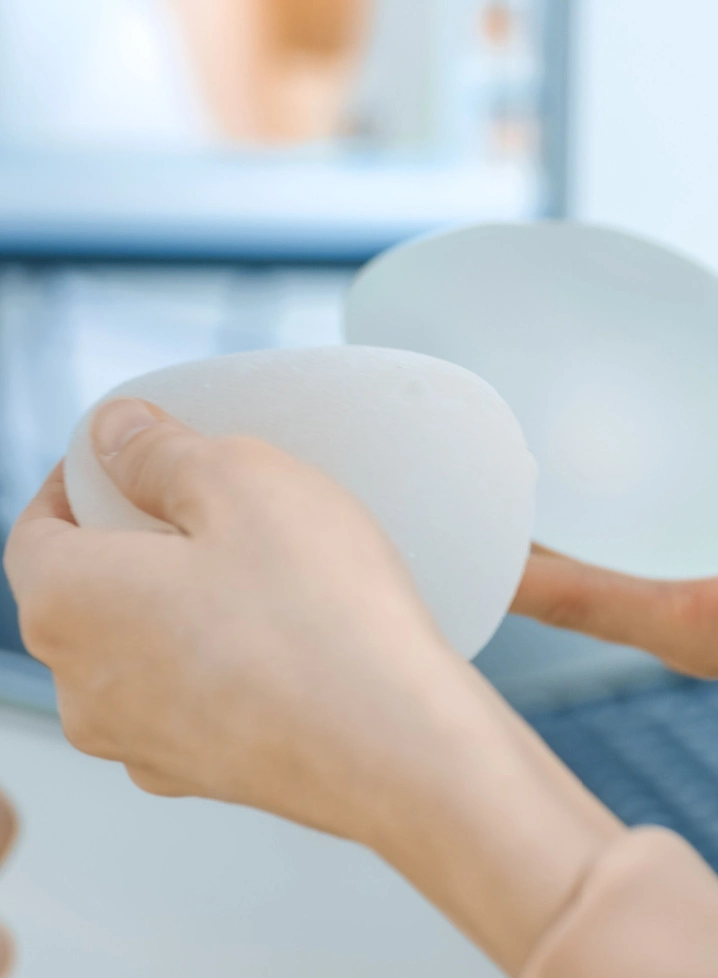
To ensure optimal device quality and excellent aesthetic results, Dr. Broumand uses implants manufactured by Allergan, Mentor, and Sientra — each considered a leader in the design and development of breast implants available in the United States. The three types offered at 740 Park Plastic Surgery are silicone gel, saline, and cohesive gel (gummy bear).
Breast Implant Types
Silicone Gel Implants
Silicone gel implants are filled with a cohesive silicone gel that closely mimics the feel of natural breast tissue. They are the most popular choice among patients seeking a soft, natural result. According to the FDA, silicone gel breast implants are approved for cosmetic use in women 22 years and older.2 Silicone implants are generally less susceptible to visible rippling than saline, making them particularly well-suited for patients with a thinner body frame. They are pre-filled at the time of manufacturing and require a slightly longer incision than saline implants.
Should a silicone implant leak, the gel may remain within the implant shell or move into the breast pocket, but the breast will not appear deflated. For this reason, routine follow-up visits and periodic imaging are important to confirm the implants remain intact over time.
Saline Implants
Saline implants are filled with sterile saltwater after placement and are FDA-approved for women 18 years and older.3 Because they are filled after insertion, saline implants can be placed through a smaller incision. If a saline implant ruptures, the body safely absorbs the saline solution and the deflation is immediately visible, making detection straightforward. Regular monitoring is still recommended.
Gummy Bear (Cohesive Gel) Implants
Gummy bear implants, also called form-stable or highly cohesive silicone implants, maintain their shape even if the outer shell is compromised. They are firmer than traditional silicone gel implants and offer a diminished rate of rippling and strong resistance to leaks in the rare event of a rupture. Available in a range of anatomical (teardrop) and round shapes, gummy bear implants are an excellent option for patients who want a defined, contoured result or who need implants to create most of their breast contour. Like silicone implants, they require routine examinations to assess condition over time.
Dr. Broumand will walk you through the advantages and considerations of each implant type during your consultation, helping you make the most informed decision for your anatomy and goals.
Breast Implant Shapes
Breast implants are available in two primary shapes: round and anatomically contoured (teardrop). The right choice depends on the look, breast projection, and proportions each patient is hoping to achieve.
Breast projection refers to how far the implants extend forward from the chest wall and is categorized into profiles: low, moderate, high, and extra-high. High-projection implants offer a more prominent forward profile, while low-projection implants have a wider base and project less. Selecting the appropriate profile is a key part of creating a balanced, proportionate result that complements your body frame.
Round Implants
Round breast implants are a strong option for patients seeking increased volume and fullness throughout the breast, including the upper pole. Higher-profile round options can create added projection for patients who desire it. Because they have a uniform shape, the risk of round implants rotating out of place is significantly reduced.
Anatomically Contoured Implants
Anatomically contoured, or teardrop-shaped, implants are generally recommended for patients who desire more volume in the lower portion of the breast without added fullness in the upper region — similar to the natural shape of the breast. They are also an excellent choice for patients with minimal or thin breast tissue who need implants to establish most of their breast contour.
Due to their fuller base and tapered top, anatomically shaped implants may produce an abnormal appearance if they rotate. A slightly larger incision is also required compared to most round implants. Dr. Broumand will assess your anatomy and goals to determine which shape is most appropriate.
Breast Implant Surfaces
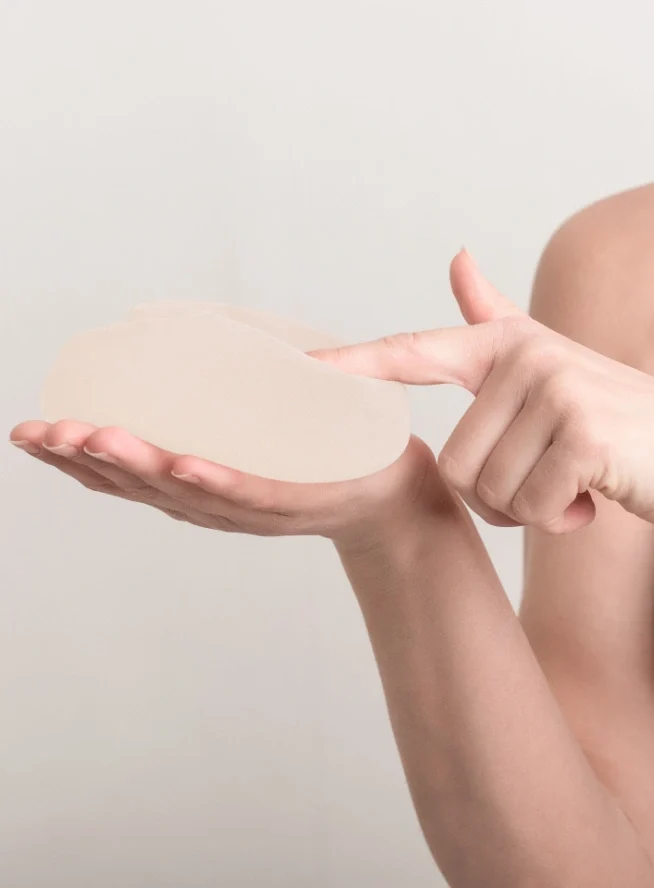
Patients have a choice between smooth and textured implant surfaces. Both options carry distinct benefits, and the right choice will depend on the individual’s preference, implant type, and shape.
Smooth Implants
Smooth breast implants typically provide the softest feel and the most natural movement, as they can shift freely within the breast pocket. A small potential disadvantage is that some degree of visible rippling, though still relatively rare, may occur at the skin surface.
Textured Implants
Textured breast implants are designed to remain securely in place inside the breast pocket, which reduces the risk of implant rotation — a particularly important benefit for teardrop-shaped implants. Textured implants have also shown a reduced rate of capsular contracture in some studies.
Each implant type, shape, and surface has advantages and considerations that Dr. Broumand will review in detail during your consultation so that the most appropriate combination can be selected for your unique needs.
Am I a Candidate for Breast Augmentation?
You may be a good candidate for breast implants if you:
- Are in good overall health and at a stable weight
- Are bothered by breasts that feel too small or lack fullness
- Have experienced volume loss following pregnancy, breastfeeding, or significant weight loss
- Have noticeable breast asymmetry you would like to correct
- Have realistic expectations about the outcome of surgery4
Patients who smoke are advised to quit well in advance of surgery, as smoking significantly increases the risk of complications and impairs healing. Dr. Broumand will review your full medical history during your consultation to confirm candidacy.
Benefits of Breast Augmentation
Breast augmentation with implants can offer meaningful, lasting improvements to your appearance and confidence, including increased breast volume and fullness, improved symmetry and proportion, restored shape following pregnancy or weight loss, and a more balanced overall silhouette. Many patients also report greater confidence in clothing and swimwear following surgery.
Implant Placement Options
Submuscular (Under the Muscle)
Submuscular placement positions the implant beneath the pectoralis major muscle. This approach provides additional tissue coverage over the implant, which can reduce the visibility of rippling and may lower the rate of capsular contracture. It is the most commonly recommended placement for patients with limited natural breast tissue.
Subglandular (Over the Muscle)
Subglandular placement positions the implant between the breast tissue and the chest muscle. This approach may be appropriate for patients with adequate existing breast tissue and can result in a shorter recovery period.
Dual Plane
In some cases, a dual plane technique is used, which partially positions the implant under the muscle while allowing the lower portion to sit behind the breast tissue. This approach is particularly useful for patients with mild breast sagging who want to avoid a separate breast lift.
Incision Options
Dr. Broumand offers several incision locations, each with distinct advantages:
- Inframammary: Placed in the natural fold beneath the breast. This is the most commonly used approach and allows precise implant positioning with well-concealed scarring.
- Periareolar: Placed along the lower edge of the areola. Scarring blends naturally with the color transition of the areolar tissue, camouflaging it effectively.
- Transaxillary: Placed in the natural crease of the underarm, leaving no scar on the breast itself. This approach may have some limitations in implant placement options depending on implant type.
The appropriate incision is determined based on implant type, size, and individual anatomy. Dr. Broumand will discuss the options and trade-offs with you at your consultation.
Implant Size and Profile
Choosing the right implant size is one of the most important decisions in the breast augmentation process. Dr. Broumand uses a combination of detailed measurements, VECTRA 3D imaging, and implant sizers to help you visualize potential outcomes before surgery. Implant profile — how far the implant projects from the chest wall — is also carefully selected to complement your frame and meet your aesthetic goals.

The Breast Augmentation Procedure
Breast augmentation at 740 Park Plastic Surgery is performed as an outpatient procedure at an accredited surgical facility. The surgery is typically performed under general anesthesia and takes approximately one to two hours to complete.
During the procedure, Dr. Broumand creates a pocket either above or below the pectoralis muscle through the chosen incision site. The implant is then carefully positioned and the incision is closed with layered sutures. Patients are monitored in recovery before being discharged home with a responsible adult.
Recovery After Breast Augmentation
Recovery from breast augmentation is gradual and varies by patient. Most patients are able to return to light daily activities within five to seven days following surgery, with a return to more strenuous activity typically permitted after four to six weeks.
General recovery milestones include:
- Days 1 to 3: Rest is essential. Mild to moderate discomfort, swelling, and tightness are normal.
- Days 5 to 7: Most patients return to desk work and light daily tasks.
- Weeks 2 to 4: Swelling begins to subside. Light walking is encouraged.
- Weeks 4 to 6: Most patients resume moderate physical activity with clearance from Dr. Broumand.
- 3 to 6 Months: Final results become visible as swelling fully resolves and implants settle into their natural position.
Dr. Broumand and his team provide detailed post-operative instructions and remain available to address any questions or concerns throughout your recovery.
Risks and Considerations
As with any surgical procedure, breast augmentation carries potential risks. According to the FDA, risks associated with breast implants may include capsular contracture (hardening of scar tissue around the implant), implant rupture or deflation, changes in nipple or breast sensation, infection, asymmetry, and the need for revision surgery.
Dr. Broumand takes a thorough, safety-first approach to minimize these risks and will discuss all potential complications with you during your consultation so you can make a fully informed decision.
Breast Implant Illness (BII)
Some patients report a range of systemic symptoms — including fatigue, joint pain, cognitive changes, and immune irregularities — that they attribute to their breast implants. This constellation of symptoms is sometimes referred to as Breast Implant Illness (BII). While BII is not currently classified as a formal clinical diagnosis, it is an area of active research that the FDA and the medical community take seriously.5 Patients with concerns about BII are encouraged to discuss their full health history with Dr. Broumand during the consultation process. For patients who choose to have their implants removed, Dr. Broumand also offers breast implant removal.

Combining Breast Augmentation with Other Procedures
Many patients choose to combine breast augmentation with a breast lift (mastopexy) to address both volume and position at the same time. This combination is particularly popular among patients who have experienced significant changes following pregnancy or weight loss. This combined approach is called breast lift with implants, and it addresses sagging and lost volume in a single operation rather than two separate surgeries. Dr. Broumand may also recommend combining breast augmentation as part of a mommy makeover — which can include a tummy tuck and liposuction — for a more comprehensive body contouring result.
For patients interested in breast enhancement without implants, 740 Park Plastic Surgery also offers natural breast enhancement through fat transfer, using fat tissues from your own body to augment or reshape the breasts with exceptional, natural-feeling results.
How Much Does Breast Augmentation Cost in NYC?
The cost of breast augmentation at 740 Park Plastic Surgery varies based on several factors, including implant type (silicone, saline, or gummy bear), surgical complexity, anesthesia fees, and facility costs. A personalized, itemized quote is provided following your consultation once Dr. Broumand has evaluated your anatomy and recommended a surgical plan. Financing options may be available, and our team is happy to walk you through payment options during your appointment.
Why Choose Dr. Broumand and 740 Park Plastic Surgery
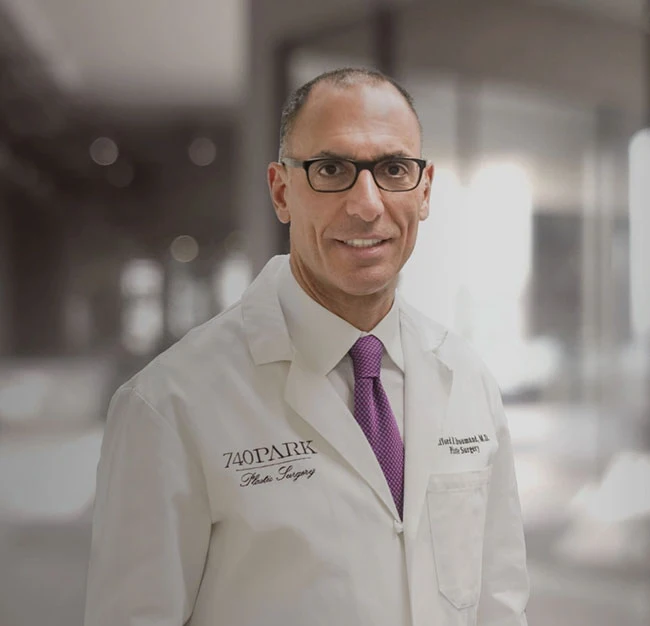
Dr. Stafford R. Broumand is one of New York City’s most credentialed plastic surgeons, bringing over 30 years of surgical experience to every procedure. He earned his medical degree from Yale School of Medicine and completed his plastic surgery residency at Massachusetts General Hospital, a Harvard-affiliated institution. He holds a faculty position as Associate Clinical Professor at the Icahn School of Medicine at Mount Sinai, where he contributes to the training of the next generation of plastic surgeons.
Dr. Broumand is certified by the American Board of Plastic Surgery and is an active member of the American Society of Plastic Surgeons. He has been recognized as a Castle Connolly Top Doctor and a New York Magazine Top Doctor on multiple occasions, and received the Daytime Beauty Award for Outstanding Achievement in Aesthetics. He also participates in charitable reconstructive surgery work through APROQUEN, providing care for children in Central America.
Board Certifications and Affiliations:
- Board Certified, American Board of Plastic Surgery (ABPS)
- Member, American Society of Plastic Surgeons (ASPS)
- Associate Clinical Professor, Icahn School of Medicine at Mount Sinai
- Yale School of Medicine, MD
- Plastic Surgery Residency, Massachusetts General Hospital (Harvard-affiliated)
- Castle Connolly Top Doctor, multiple years
- New York Magazine Top Doctor, multiple years
- Daytime Beauty Award, Outstanding Achievement in Aesthetics
Patient Reviews and Results
Dr. Broumand’s breast augmentation results speak for themselves. Visit the Patient Gallery to browse before and after photos from real patients, then schedule a consultation to discuss what’s possible for your unique anatomy.
What patients say about their experience at 740 Park Plastic Surgery:
Frequently Asked Questions
How long do breast implants last?
Breast implants are not considered lifetime devices. According to the FDA, the longer a patient has implants, the greater the likelihood of eventually needing revision surgery. Many patients enjoy their results for 10 to 20 years or more before considering replacement.6 Dr. Broumand will discuss implant longevity and monitoring expectations during your consultation.
Will breast implants affect mammogram readings?
Breast implants can impact the way mammograms are performed. Patients with implants should inform their mammography technician prior to imaging. Additional views, known as implant displacement views, are used to ensure adequate breast tissue visualization. Regular mammography screening should continue as recommended by your physician.
Can I breastfeed after breast augmentation?
Most women are able to breastfeed after breast augmentation, though some may experience changes in milk production depending on the incision location and implant placement.7 If you plan to have children in the future, this is an important topic to discuss with Dr. Broumand so that surgical techniques that preserve milk ducts and nipple sensitivity can be considered.
Is a breast lift necessary if I have sagging breasts?
If breast sagging or significant volume loss is a concern, a breast lift can be performed in conjunction with breast augmentation for optimal results. This combination enhances the breast’s shape, position, and size simultaneously. The decision is based on individual anatomy and desired outcome, which Dr. Broumand reviews thoroughly during the consultation.
How is implant size chosen?
Choosing the right implant size is a critical aspect of achieving your desired look. Dr. Broumand uses a combination of detailed measurements, VECTRA 3D imaging, and implant sizers during your consultation to help you visualize potential outcomes. Your body contouring goals, natural breast volume, body frame, and personal preferences are all considered.
Can liposuction be combined with breast augmentation?
Yes. Liposuction can be combined with breast augmentation as part of a comprehensive body contouring approach. This combination can address excess fat in specific areas such as the bra line while enhancing breast size and shape, providing a more balanced, proportionate figure. It is also a common component of the mommy makeover.
What is capsular contracture?
Capsular contracture occurs when the scar tissue that naturally forms around an implant tightens and hardens, potentially causing discomfort or a change in breast shape. It is one of the more common complications associated with breast implants.8 Dr. Broumand uses surgical techniques designed to minimize this risk and will discuss it fully during your consultation.
What should I expect during the initial consultation?
During the consultation, Dr. Broumand will discuss your aesthetic goals, evaluate your breast volume and body frame, and review implant types, sizes, shapes, surfaces, placement options, and incision choices. He will also cover risks, recovery expectations, and any other procedures that may complement your goals. VECTRA 3D imaging is used to show you how potential results may look on your own body. The consultation is designed to ensure you feel well-informed and confident in your decision.
What is Breast Implant Illness?
Breast Implant Illness (BII) refers to a constellation of systemic symptoms some patients report in association with their implants, including fatigue, brain fog, joint pain, and immune irregularities.9,10 BII is not currently a formally recognized clinical diagnosis, but it is taken seriously by the FDA and the medical community. If you have concerns about BII, Dr. Broumand encourages you to raise them during your consultation. Breast implant removal is also available for patients who wish to have their implants explanted.
Contact Us
If you are ready to explore breast implants in NYC, Manhattan, or New York City, we invite you to schedule a consultation with Dr. Stafford R. Broumand at 740 Park Plastic Surgery. Our team is here to answer your questions, walk you through your options, and help you feel confident in your decision.
Schedule your consultation today.
Interested in Breast Augmentation or Reconstruction Without Implants?
As an alternative to breast augmentation and breast reconstruction with implants, our plastic surgeons can enhance or reconstruct your breasts via fat transfer. This innovative technique involves the use of fat tissues taken from your own body to augment, reshape, or reconstruct the breasts with exceptional results. To learn more about this advanced surgical option, please visit our page on natural breast enhancement.
Contact Us
- 1 American Society of Plastic Surgeons. 2024 Plastic Surgery Statistics. Available: https://www.plasticsurgery.org/documents/news/statistics/2024/plastic-surgery-statistics-report-2024.pdf. Accessed May 4, 2026.
- 2 U.S. Food and Drug Administration. Breast Implants. Available: https://www.fda.gov/medical-devices/implants-and-prosthetics/breast-implants. Accessed May 4, 2026.
- 3 U.S. Food and Drug Administration. Breast Implants. Available: https://www.fda.gov/medical-devices/implants-and-prosthetics/breast-implants. Accessed May 4, 2026.
- 4 American Society of Plastic Surgeons. Who is a good candidate for breast augmentation? Available: https://www.plasticsurgery.org/cosmetic-procedures/breast-augmentation/candidates. Accessed May 4, 2026.
- 5 U.S. Food and Drug Administration. Risks and Complications of Breast Implants. Available: https://www.fda.gov/medical-devices/breast-implants/risks-and-complications-breast-implants. Accessed May 4, 2026.
- 6 U. S. Food and Drug Administration. What to Know About Breast Implants. Available: https://www.fda.gov/consumers/consumer-updates/what-know-about-breast-implants. Accessed May 4, 2026..
- 7 Schiff, M, et al. The impact of cosmetic breast implants on breastfeeding: a systematic review and meta-analysis. International Breastfeeding Journal 2014; 9: 17.10.1186/1746-4358-9-17. Accessed May 4, 2026.
- 8 U.S. Food and Drug Administration. Risks and Complications of Breast Implants. Available: https://www.fda.gov/medical-devices/breast-implants/risks-and-complications-breast-implants#Capsular_Contracture. Accessed May 4, 2026.
- 9 Cleveland Clinic. Breast Implant Illness. Available: https://my.clevelandclinic.org/health/diseases/23366-breast-implant-illness. Accessed March 28, 2025.
- 10 U.S. Food and Drug Administration. Risks and Complications of Breast Implants. Available: https://www.fda.gov/medical-devices/breast-implants/risks-and-complications-breast-implants. Accessed May 4, 2026.
Dr. Stafford Broumand has reviewed and approved this content.
Page Updated: