


Botox® Cosmetic
- What Is BOTOX Cosmetic?
- How Does BOTOX Work?
- What Areas Can BOTOX Treat?
- How Do I Prepare for My BOTOX Appointment?
- What Should I Expect During My BOTOX Appointment?
- What Do BOTOX Results and Recovery Look Like?
- Am I a Good Candidate for BOTOX?
- How Is BOTOX Different From Dysport and Xeomin?
- Can I Combine BOTOX With Other Treatments?
- What Do Our Patients Say?
- Why Choose 740 Park Plastic Surgery for BOTOX?
- Frequently Asked Questions
BOTOX Cosmetic is an FDA-approved injectable that softens dynamic wrinkles in the upper face by temporarily relaxing the muscles responsible for frown lines, crow’s feet, forehead lines, and bands along the jaw and neck. Each treatment plan is tailored to the patient’s anatomy and goals for natural-looking results.
Many patients in NYC, Manhattan, and New York City turn to BOTOX Cosmetic to soften forehead lines and crow’s feet. At 740 Park Plastic Surgery, BOTOX is offered as part of a broader menu of injectable treatments, under the oversight of board-certified plastic surgeon Dr. Stafford Broumand.”
- What Is BOTOX Cosmetic?
- How Does BOTOX Work?
- What Areas Can BOTOX Treat?
- How Do I Prepare for My BOTOX Appointment?
- What Should I Expect During My BOTOX Appointment?
- What Do BOTOX Results and Recovery Look Like?
- Am I a Good Candidate for BOTOX?
- How Is BOTOX Different From Dysport and Xeomin?
- Can I Combine BOTOX With Other Treatments?
- What Do Our Patients Say?
- Why Choose 740 Park Plastic Surgery for BOTOX?
- Frequently Asked Questions
What Is BOTOX Cosmetic?
BOTOX Cosmetic is an injectable treatment made from a purified form of botulinum toxin type A, injected in small, precise doses to temporarily relax the facial muscles that cause dynamic wrinkles. The FDA has approved BOTOX Cosmetic for adults to improve the appearance of moderate to severe frown lines, crow’s feet, forehead lines, and bands along the jaw and neck.
How Does BOTOX Work?
BOTOX works by blocking the nerve signals that tell a specific muscle to contract. Once the muscle can no longer contract as strongly, the skin above it smooths out, softening lines caused by repeated expression, like frowning or squinting. Results typically begin within three to five days and reach their full effect by about two weeks.
What Areas Can BOTOX Treat?
BOTOX is best known for treating the upper third of the face, where dynamic wrinkles form from years of expression. Your provider designs a plan around your specific concerns during your consultation. Common treatment areas include:
- Frown lines (the “11s”) between the eyebrows
- Crow’s feet at the outer corners of the eyes
- Horizontal forehead lines
- Bunny lines on the sides of the nose
- A subtle brow lift without surgery
- Vertical bands along the jaw and neck (see our dedicated neck band treatment page for details)
Some patients also start BOTOX earlier, in their late 20s or early 30s, as a preventative step sometimes called “prejuvenation.” Treating expression lines while they are still faint can help keep them from becoming etched into the skin at rest, and research on regular BOTOX treatment over time has found cumulative improvements in skin quality with continued use. Read more about preventative BOTOX on our blog.
How Do I Prepare for My BOTOX Appointment?
A little preparation helps your BOTOX appointment go smoothly and lowers the chance of bruising. In the 24 to 48 hours before your appointment, avoid alcohol, aspirin, ibuprofen, fish oil, and vitamin E supplements. Skip retinol and exfoliating skincare on the treatment area for a few days beforehand, and arrive with clean, makeup-free skin so your provider can plan your injections accurately. If you take a prescribed blood thinner, do not stop it without talking to your physician first.
What Should I Expect During My BOTOX Appointment?
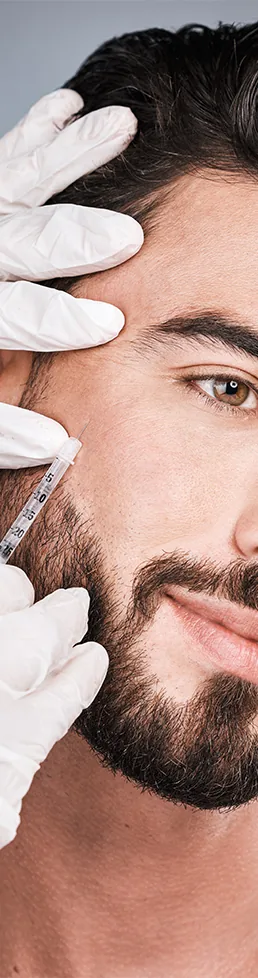
A BOTOX appointment at our practice typically takes 15 to 20 minutes from start to finish. Your provider begins with a facial assessment, evaluating your muscle strength, symmetry, and natural expression pattern to determine dose and injection placement. The treatment itself involves a series of small injections with a fine needle into the targeted muscles.
Most patients describe the sensation as a brief pinch. No anesthesia is required, and there is no downtime.
What Do BOTOX Results and Recovery Look Like?
Some minor bruising or swelling may occur after treatment, though it is usually limited given our providers’ meticulous technique. Most people return to work and normal activities immediately. We recommend staying upright for the first four hours, avoiding rubbing the treated area for 24 hours, and skipping strenuous exercise, saunas, and steam rooms for the rest of the day. The duration of effect for BOTOX Cosmetic is approximately three to four months.

Am I a Good Candidate for BOTOX?
Most healthy adults who want to soften expression lines, prevent existing lines from deepening, or refresh their appearance without surgery are good candidates for BOTOX. During your consultation, your provider will review your medical history and current medications to confirm BOTOX is a safe, appropriate choice for you. BOTOX is not recommended during pregnancy or breastfeeding, and it is not appropriate for anyone younger than 18.
How Is BOTOX Different From Dysport and Xeomin?
BOTOX, Dysport, and Xeomin are all FDA-approved neuromodulators derived from botulinum toxin type A, and each can produce excellent results in the right hands. Here’s how patients typically compare them:
| Neuromodulator | How Fast It Kicks In | Good to Know |
|---|---|---|
| BOTOX | Full effect in about two weeks | The most established option, FDA-approved for frown lines, crow’s feet, forehead lines, and jaw/neck bands |
| Dysport | Some patients notice results a few days sooner | Often used to treat larger areas, such as the forehead |
| Xeomin | Similar timeline to BOTOX | May be a good option if your body has built up resistance to other neuromodulators |
One note if you’re comparing options: a “unit” of BOTOX isn’t measured the same way as a unit of Dysport or Xeomin, so you can’t compare the number of units, or the price per unit, across these products the way you might compare two bottles of the same size. Your provider determines the right dose for you based on the specific product you choose and your individual anatomy, not a one-to-one conversion from another brand.
Can I Combine BOTOX With Other Treatments?
Yes. Many patients pair BOTOX with other treatments in the same visit to address more than one concern. Dermal fillers add volume to areas BOTOX cannot treat, such as the cheeks and lips. Morpheus8® combines radiofrequency energy with microneedling to improve skin texture and firmness. AquaGold® Fine Touch delivers a customized blend of skincare ingredients through ultra-fine channels for a subtle glow. During your consultation, your provider can design a plan that combines BOTOX with any of these options to meet your goals.
For a broader look at how treatments work together, read our guide to combining surgical and non-surgical treatments on our blog.
BOTOX can also treat more than facial lines. If you deal with excessive underarm sweating, BOTOX for Sweating is available at our practice as a separate treatment.
What Do Our Patients Say?
Patients at 740 Park Plastic Surgery tend to mention the same two things about their experience: how natural their results look, and how much time our team takes to understand what they actually want. Here’s what a few of them have said.
“The absolute best of the best. If you know, you know. This office is discreet, talented, knowledgeable, caring, clean, beautiful, and wonderfully staffed. Working with them is a privilege in my book!”
– Elizabeth S.
Google Review
⭐⭐⭐⭐⭐
“The office is beautiful, the team is wonderful, and Dr. Broumand is incredible. First class treatment and very caring individuals.”
– Lew4Kids
Google Review
⭐⭐⭐⭐⭐
Why Choose 740 Park Plastic Surgery for BOTOX?
BOTOX looks its best when it’s administered with a deep understanding of facial anatomy and how a small change in one area affects the whole face. At 740 Park Plastic Surgery, every BOTOX treatment plan reflects that standard, built around your specific anatomy and expression patterns rather than a one-size-fits-all injection map.
Every consultation starts with listening: what bothers you, what result you want, and what you want to avoid. That unhurried, individualized approach, backed by ongoing follow-up care, is what patients notice most.
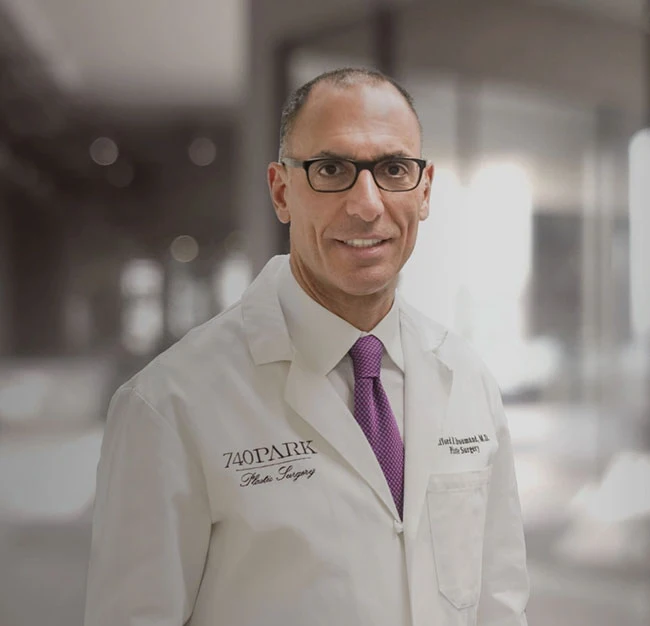
BOTOX at our practice is delivered under the collaborative oversight of board-certified plastic surgeon Dr. Stafford Broumand, whose more than 30 years of clinical experience and AAAASF-certified surgical suite set the clinical standard for every provider at the practice. Choosing an accredited practice matters: read about the risks at unlicensed medical spas in NYC to understand why credentials and oversight protect patients.
Frequently Asked Questions
How long does BOTOX last, and will I need touch-ups?
BOTOX typically lasts three to four months in the treated area, the same window we cover in the results and recovery section above. Many patients schedule a touch-up treatment about every three to four months to maintain their results, similar to a recurring hair color or skincare appointment. Research on repeated BOTOX treatments over time has found this maintenance approach to be safe and effective. How long BOTOX lasts for you depends on your metabolism, muscle strength, and how much you use the treated muscles.
What’s the right age to start BOTOX?
There’s no single right age. Many patients begin in their late 20s or early 30s as a preventative step, often called “prejuvenation,” to keep expression lines from becoming etched into the skin. Others start later, once lines are visible even when their face is at rest. We can help you decide what makes sense for your skin and goals during your consultation.
Does BOTOX hurt?
BOTOX is generally well tolerated. Most patients describe the injections as a quick pinch, and no anesthesia is needed. A topical numbing cream or cold compress is available if you would like extra comfort.
Is BOTOX safe, and what are the side effects?
BOTOX is FDA-approved and has been studied extensively for cosmetic use. A review of the strongest available clinical research found it works well for facial wrinkles and is generally safe, though it can somewhat increase the chance of temporary eyelid drooping. Other side effects are typically mild, such as redness, swelling, or slight bruising at the injection site. Serious complications are rare when BOTOX is administered by a trained, experienced injector.
Will people be able to tell I’ve had BOTOX?
Not with the conservative technique used at our practice. She doses conservatively and places injections to soften lines while preserving your natural movement and expression, so the result reads as refreshed rather than “done.” If you’re ever unsure how a treatment will look on you, ask about it during your consultation. Your provider will walk you through what to expect before you’re injected.
What happens if I stop getting BOTOX?
Nothing permanent. If you stop treatment, your muscles gradually return to their normal activity and the lines you were treating reappear over time, the same as they were before you started. There is no rebound effect or dependency.
How much does BOTOX cost at 740 Park Plastic Surgery?
BOTOX is priced by the number of units your treatment requires, and we will discuss the full cost with you before treatment begins. Consultations at our practice are paid rather than complimentary. If cost is a factor, ask about flexible payment plans during your consultation.
Schedule A Consultation
Ready to soften your frown lines, crow’s feet, or forehead lines? Schedule a consultation at 740 Park Plastic Surgery, serving patients throughout NYC, Manhattan, and New York City.
U.S. Food and Drug Administration. BOTOX Cosmetic (onabotulinumtoxinA) Prescribing Information and Medication Guide. Revised October 2024. https://www.accessdata.fda.gov/drugsatfda_docs/label/2024/103000s5316s5319s5323s5326s5331lbl.pdf
Camargo CP, Xia J, Costa CS, Gemperli R, Tatini MD, Bulsara MK, Riera R. Botulinum Toxin Type A for Facial Wrinkles. Cochrane Database Syst Rev. 2021;7(7):CD011301. https://www.cochranelibrary.com/cdsr/doi/10.1002/14651858.CD011301.pub2/full
Humphrey S, Jacky B, Gallagher CJ. Preventive, Cumulative Effects of Botulinum Toxin Type A in Facial Aesthetics. Dermatol Surg. 2017;43(Suppl 3):S244-S251. https://pubmed.ncbi.nlm.nih.gov/33065950/
Carruthers J, Rivkin A, Donofrio L, Bertucci V, Somogyi C, Lei X, et al. A Multicenter, Randomized, Double-Blind, Placebo-Controlled Study to Evaluate the Efficacy and Safety of Repeated OnabotulinumtoxinA Treatments in Subjects With Crow’s Feet Lines and Glabellar Lines. Dermatol Surg. 2015;41(6):702-711. https://doi.org/10.1097/DSS.0000000000000357
Dr. Stafford Broumand has reviewed and approved this content.
Page Updated: